Lint in Locs: Causes and How to Prevent It (Nairobi)
Lint in locs is common in Nairobi's dusty, windy climate. Learn what causes it, where it hides, and how satin, washing and smart habits keep it out.
If you’ve ever flipped through your locs after a wash and spotted tiny pale fibres clinging to the root or the tip, that’s lint in your locs, and it is one of the most common things clients ask us about at Fabz Hair and Beyond. It isn’t dirt, and it isn’t dandruff. It’s loose fabric fibre from everyday life that your locs have quietly collected and held onto. The good news is that lint is almost entirely preventable once you know where it’s coming from and what to change.
Key Takeaways
- Lint in locs comes from fabric, not dirt, so it shows up fastest around pillowcases, towels and clothing
- It accumulates most at the loc ends and along the nape of the neck, where fabric contact happens constantly
- Satin or silk, not cotton, is the single biggest prevention step you can take
- Mature locs can usually be freed of surface lint with patient picking or a soft brush; deeply embedded lint needs a professional hand
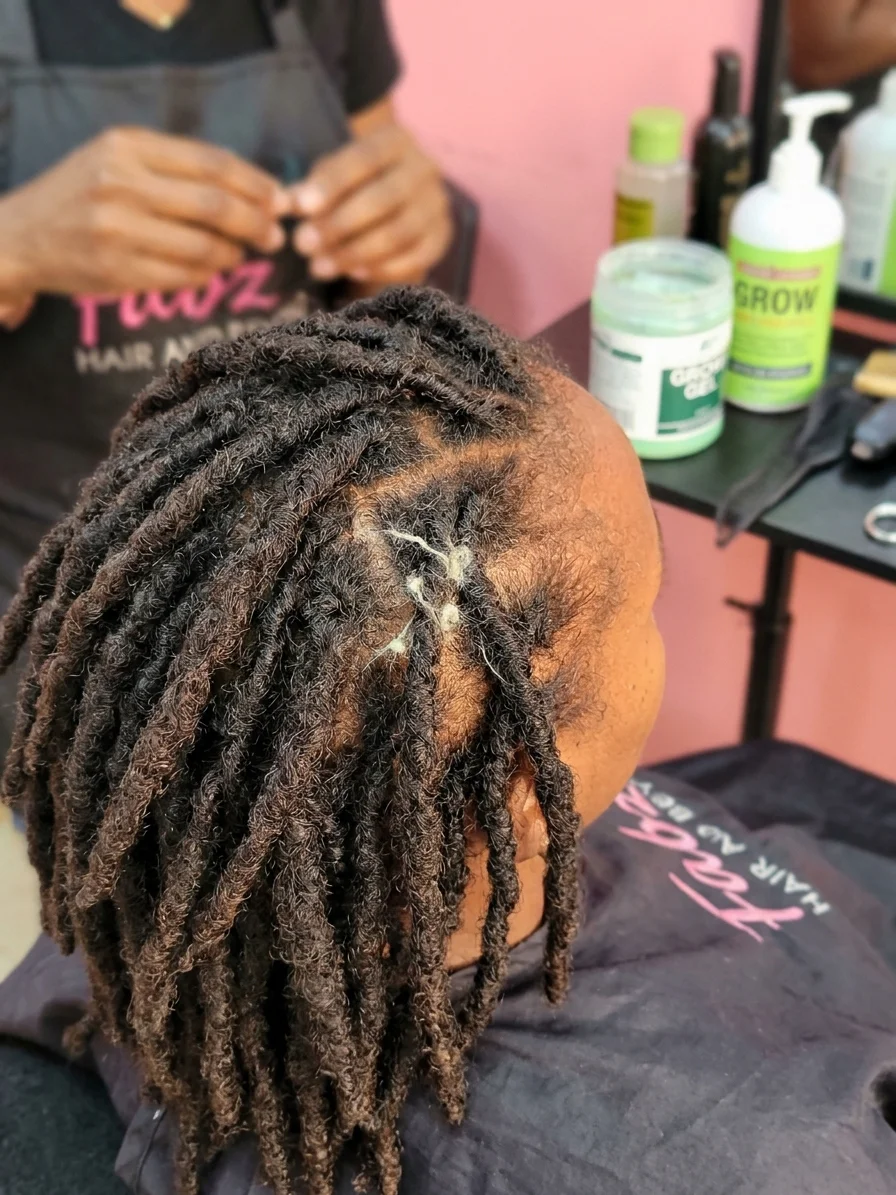
What Causes Lint in Locs?
Lint in locs almost always comes from fabric your hair touches for long stretches at a time. Cotton pillowcases are the biggest culprit, since you’re in contact with one for six to eight hours every night and cotton sheds fibre easily. Bath towels are a close second, especially if you’re rubbing your locs dry instead of squeezing them. Beyond those two, everyday clothing plays a role too: hoodies, scarves, jumpers and fleece blankets all shed loose fibre that your locs are happy to pick up and hold. None of this means you’re doing anything wrong. It just means your locs have been in contact with the wrong fabric for long enough that the fibre had time to work its way in.
Stylist Tip
Why Do Locs Trap Lint in the First Place?
Loose hair sheds fibre too, it just falls straight back out. Locs don’t work that way. The whole point of a loc is that the hair is twisted and compacted into a rope-like structure, which means any loose fibre that lands on it gets caught in the twist rather than falling away. The more textured or fuzzy the surface of a loc, typically during the early or teenage stage, the more easily it grabs onto whatever fabric fibre happens to be nearby. Fully mature, tightly locked hair still picks up lint, but it tends to sit more on the surface rather than working deep into the core.
"Locs don't attract lint because something is wrong with them. They attract lint because that's what a twisted, textured rope does to loose fibre sitting right next to it."
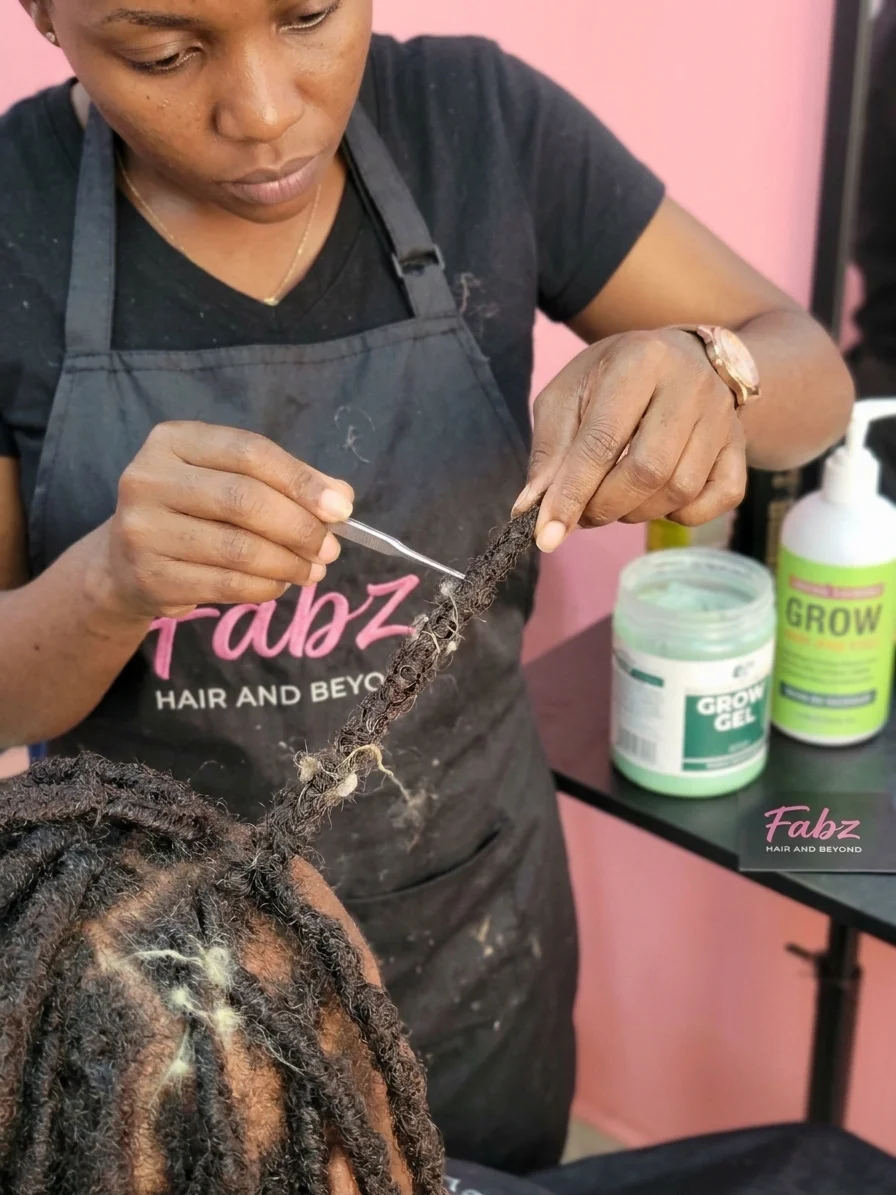
Where Does Lint Build Up the Most?
Lint doesn’t spread evenly across your head. It concentrates wherever fabric contact is constant, and for most people that means three spots. The ends of your locs, especially if they rest against your shoulders, your collar or a scarf all day. The nape of the neck and the back row of locs, which spend hours pressed against hoodie collars, jacket backs and pillows. And any section that gets wrapped tightly in a headscarf or beanie on a daily basis. If you want to know where to focus your prevention habits, start by checking those three areas first.
How to Prevent Lint From Getting Into Your Locs
Prevention comes down to one simple idea: reduce how much rough fabric your locs actually touch.
Swap cotton for satin or silk. This is the single most effective change you can make. A satin bonnet or scarf at night, and a satin-lined jacket collar or scarf during the day, remove most of the fibre source before it ever reaches your hair.
Dry with a microfibre towel, not a cotton one. Cotton towels shed fibre exactly when your locs are damp and most likely to grab onto it. Microfibre doesn’t shed the same way, and it dries faster too.
Be deliberate about what you wear around your head. Fuzzy hats, wool scarves and fleece-lined hoods are lint factories. If you’re going to be in one for a while, tuck your locs away or line the inside with a satin scarf first.
Keep your locs covered during dusty or active days. Nairobi’s dry-season dust and general everyday activity, from matatu rides to a workout, all add loose fibre and debris into the mix. A light scarf or wrap during those hours does double duty against both lint and dust.

How Product Buildup Makes Lint Worse
Lint and buildup are two different problems, but they feed off each other. Heavy oils, butters, gels and waxes leave a tacky residue on the surface of your locs, and that residue acts like glue for any loose fibre floating nearby. The result is lint that doesn’t just sit on the surface where you could easily brush it away, but works deeper into the loc and binds there. Keeping your routine on the lighter side, and choosing residue-free, water-based products over heavy butters and wax, makes a real difference to how much lint actually sticks. For the full rundown on washing frequency and product choice for Nairobi’s climate, our loc maintenance tips guide walks through it stage by stage.
Loc Retouch & Assessment
Featured Service
Loc Retouch
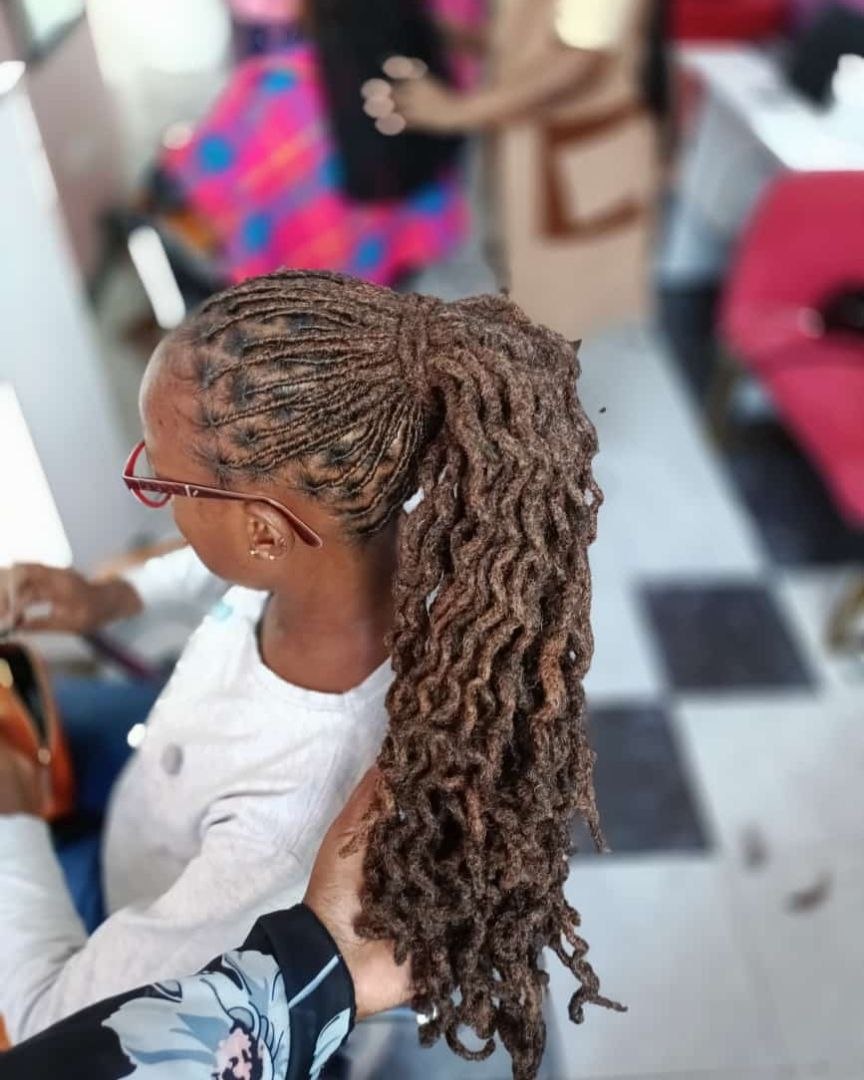
A professional retwist session where we also check your locs for embedded lint, buildup and early matting you won't catch in a mirror.
Can You Remove Lint From Mature Locs?
Surface lint on mature, well-set locs usually comes out with patience. A soft, fine-bristle loc brush or a lint-lifting tool worked gently from the tip upward will lift most of it over a few sessions, so don’t expect it all to disappear in one sitting. Lint that has been there for months, especially if it’s mixed with product buildup, sits much deeper and is genuinely difficult to remove without professional help. Pulling or picking aggressively at a loc to force lint out risks loosening the structure you’ve spent months building, so if a few passes with a brush aren’t shifting it, that’s the point to book an assessment rather than keep digging at it yourself. Our loc services team can tell at a glance whether what you’re dealing with is manageable at home or needs a proper clarifying session.
An Everyday Lint Prevention Routine
You don’t need an elaborate system, just three consistent habits.
Morning: give your locs a quick visual check, especially around the ends and the nape, before you head out dressed for the day.
Daytime: keep a satin scarf or liner on hand for anything fuzzy you’re wearing around your head or neck, and cover up during dusty commutes or workouts.
Nighttime: cover your locs in satin or silk before bed, every night, no exceptions. This one habit prevents more lint than everything else on this list combined.
If you want the fuller version of this routine, including washing schedules and moisture habits for Nairobi’s climate, our guide on how to maintain your locs at home is the natural next read.